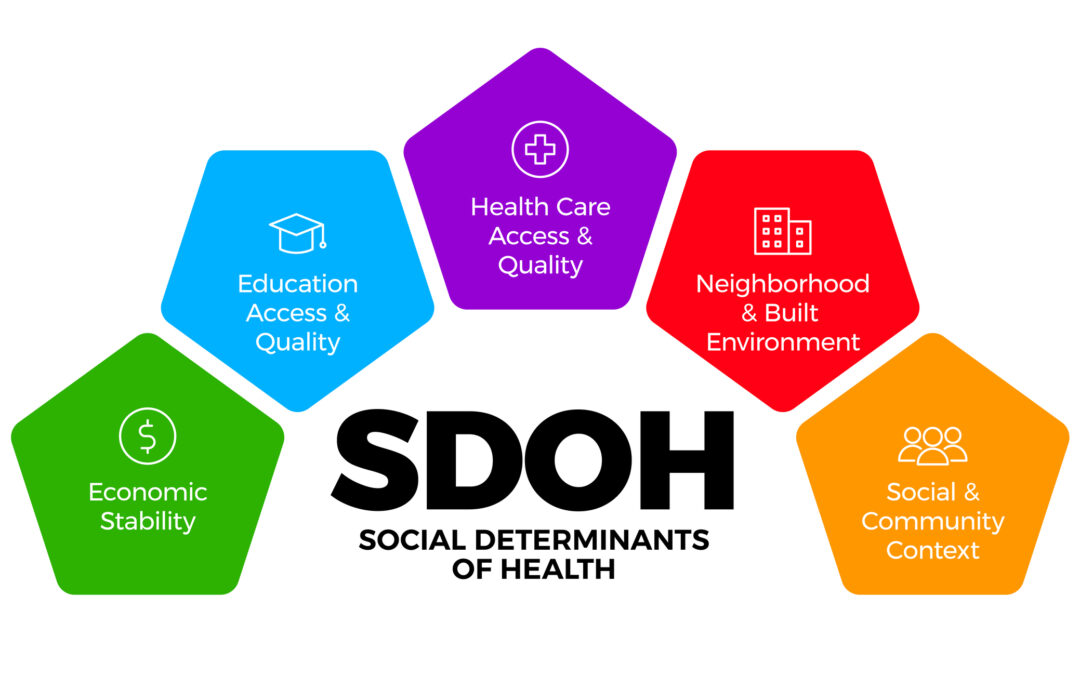
Discussions of social determinants of health often focus on outcomes: poverty, food insecurity, housing shortages, poor health access, and shorter life expectancy. For Native American and Alaska Native communities, these outcomes are real and measurable. But focusing only on impact misses the deeper and more important question:
Why do these social determinants exist in the first place?
For Indigenous peoples in the United States, social determinants of health are not accidental. They are the predictable result of historical processes, legal frameworks, economic systems, and political decisions that continue to shape Native lives today. Health inequities are not simply social problems; they are structural conditions created and maintained by policy.
This article examines the root causes of social determinants of health for Native American communities—historically and in the present political environment.
Social Determinants of Health Are Produced by Systems, Not Circumstances
Social determinants of health are often framed as neutral conditions: where people live, work, and learn. In reality, these conditions are produced by systems of power.
For Native communities, social determinants of health are shaped by:
- Federal Indian law and policy
- Forced land dispossession
- Treaty violations
- Racial capitalism
- Chronic underfunding of tribal systems
- Political marginalization
Unlike many other populations experiencing health inequities, Native nations exist in a unique political relationship with the United States. Tribes are sovereign governments, yet they are economically constrained by federal control over land, resources, and funding.
This contradiction lies at the heart of Indigenous health inequity.
Colonization as the First Social Determinant of Health
Colonization is not simply a historical event—it is an ongoing structure.
Before European contact, Indigenous nations across North America had:
- Stable food systems
- Land-based economies
- Sophisticated governance
- Community-based health systems
- Strong intergenerational care
Colonization disrupted every one of these systems. Violence, disease, forced removal, and cultural suppression created the first large-scale health crises for Indigenous peoples.
Land loss, in particular, is the foundational social determinant of health.
When tribes lost land, they lost:
- Economic independence
- Food sovereignty
- Environmental control
- Housing stability
- Political leverage
Modern social determinants of health—poverty, overcrowding, food insecurity—are downstream effects of this original dispossession.
Treaties, Trust Responsibility, and Structural Dependency
Treaties between tribes and the United States were not acts of charity. They were nation-to-nation agreements in which tribes ceded land in exchange for protection, services, and support.
Health care, education, and housing were explicitly included in many treaty obligations.
The federal government’s trust responsibility is the legal and moral obligation to uphold these commitments. Yet treaty promises have rarely been fully honored.
The result is a system where:
- Tribes are legally dependent on federal funding
- Funding is discretionary rather than guaranteed
- Essential services are under-resourced
- Tribal self-determination is constrained
Health systems built on broken promises inevitably produce health inequities.
The Role of Federal Indian Policy in Shaping Social Conditions
U.S. Indian policy has shifted over time, but each era left lasting damage to social determinants of health.
Removal and Reservation Era
Tribes were forcibly relocated to marginal lands, often far from traditional food sources or trade routes. Reservations were deliberately under-resourced and isolated.
Allotment and Assimilation
The Dawes Act broke communal land into individual parcels, opening “surplus” land to non-Native settlement. This:
- Destroyed tribal land bases
- Fragmented governance
- Created intergenerational poverty
Boarding School Era
Children were removed from families, forbidden to speak their languages, and subjected to abuse. This caused:
- Intergenerational trauma
- Disruption of parenting and caregiving systems
- Long-term mental health impacts
These policies did not simply affect culture—they reshaped the social and economic foundations that determine health.
The Indian Health Service and Structural Underfunding
The Indian Health Service is often cited as evidence that Native people receive “free health care.” This framing is deeply misleading.
IHS is not an entitlement program. It is a discretionary program funded annually by Congress. Per capita spending is significantly lower than for other federal health systems, including Medicaid, Medicare, and the Veterans Health Administration.
Underfunding leads to:
- Limited specialty care
- Staffing shortages
- Deferred maintenance
- Long travel distances
- Rationed services
These are not administrative failures—they are political choices.
Health becomes a social determinant when access is structurally limited by funding decisions made far from the communities affected.
Economic Marginalization and the Limits of Tribal Economies
Many social determinants of health are tied to income and employment. Tribal economies, however, operate under constraints unlike those faced by states or municipalities.
Factors include:
- Federal trust status limiting land use
- Barriers to capital and lending
- Regulatory complexity
- Geographic isolation
While some tribes have developed successful enterprises, many are located in rural areas with limited infrastructure. Economic development is often constrained by historical land loss and ongoing federal oversight.
Poverty in Native communities is not the result of individual behavior—it is the outcome of structural economic exclusion.
Education Systems and the Reproduction of Inequity
Education is often framed as a pathway out of poverty. Yet Native education systems have long been shaped by underfunding and external control.
Bureau of Indian Education schools have historically received less funding than public schools, with poorer facilities and fewer resources. Curriculum has often excluded Native history or reinforced stereotypes.
Education systems reproduce social determinants of health when they:
- Limit future employment opportunities
- Undermine cultural identity
- Fail to support Native language and knowledge
Education policy is health policy, whether acknowledged or not.
Environmental Injustice as a Social Determinant of Health
Many Native communities live with environmental risks imposed without consent.
Examples include:
- Uranium mining
- Oil and gas extraction
- Waste disposal sites
- Water contamination
These exposures increase rates of cancer, respiratory illness, and chronic disease. Environmental harm also disrupts traditional food systems and spiritual practices tied to land and water.
Environmental injustice is not incidental—it reflects the political marginalization of tribal governments in regulatory decisions.
Urbanization and the Policy Erasure of Native People
Today, the majority of Native Americans live in urban areas. Yet federal policy and funding structures remain reservation-focused.
Urban Native people often face:
- Invisibility in data systems
- Limited access to culturally responsive care
- Fragmented social services
Urban Indian health programs are chronically underfunded, despite serving large populations. This mismatch between population reality and policy design creates new social determinants of health rooted in administrative neglect.
The Current Political Environment
In the current political climate, social determinants of health for Native communities are shaped by:
- Threats to Medicaid funding
- Debates over tribal sovereignty
- Climate change impacts
- Workforce shortages
- Data misclassification
Federal agencies such as the U.S. Department of Health and Human Services play a central role in determining whether tribal programs are adequately supported or left vulnerable.
At the same time, tribes are increasingly asserting control over health systems through self-governance compacts, data sovereignty initiatives, and community-driven models of care.
Social Determinants of Health as Political Determinants
For Native American communities, social determinants of health are best understood as political determinants.
They are shaped by:
- Who controls land
- Who controls funding
- Whose data counts
- Whose sovereignty is respected
Health inequities persist not because solutions are unknown, but because structural change threatens entrenched systems of power.
Toward Structural Health Equity
Improving Indigenous health requires more than programs. It requires:
- Full funding of treaty obligations
- Respect for tribal sovereignty
- Investment in land, housing, and infrastructure
- Support for tribal self-determination
- Recognition of historical and ongoing harm
Health equity for Native peoples is not a technical challenge—it is a matter of justice.
Conclusion
Social determinants of health in Native American communities exist because of deliberate historical and political processes. Colonization, treaty violations, underfunding, and systemic exclusion have shaped the conditions that determine health outcomes today.
Understanding these root causes shifts the conversation from blame to responsibility. It reframes Indigenous health inequities not as failures of communities, but as failures of systems.
Until the structural origins of social determinants of health are addressed, health inequities will persist. When they are confronted honestly and collectively, healing becomes possible—not only for Native communities, but for the nation as a whole.
References
Centers for Disease Control and Prevention
Centers for Disease Control and Prevention. (2022). Social determinants of health: Know what affects health. CDC.
This source defines social determinants of health and frames them as conditions shaped by systems, policies, and environments.
Indian Health Service
Indian Health Service. (2023). Disparities. U.S. Department of Health and Human Services.
Provides data on health disparities among American Indian and Alaska Native populations and documents chronic underfunding of IHS.
U.S. Department of Health and Human Services
U.S. Department of Health and Human Services. (2021). Indian Health Service: Justification of estimates for appropriations committees.
Details federal funding structures, limitations, and unmet need in tribal health systems.
National Congress of American Indians
National Congress of American Indians. (2019). Tribal nations and the United States: An introduction.
Explains the trust responsibility, treaty obligations, and the political relationship between tribes and the federal government.
U.S. Commission on Civil Rights
U.S. Commission on Civil Rights. (2018). Broken promises: Continuing federal funding shortfall for Native Americans.
A comprehensive analysis linking underfunding to structural inequities in health, housing, education, and infrastructure.
National Academies of Sciences, Engineering, and Medicine
National Academies of Sciences, Engineering, and Medicine. (2017). Communities in action: Pathways to health equity.
Frames health inequities as the result of structural and political determinants rather than individual behavior.
Urban Indian Health Institute
Urban Indian Health Institute. (2020). Invisible tribes: Urban Indians and their health in a changing world.
Documents policy erasure and funding gaps affecting urban Native populations.
Environmental Protection Agency
Environmental Protection Agency. (2021). Environmental justice and tribal communities.
Examines environmental health risks disproportionately affecting tribal lands and Native populations.
Substance Abuse and Mental Health Services Administration
Substance Abuse and Mental Health Services Administration. (2014). Historical trauma and Native American communities.
Connects historical trauma, mental health outcomes, and substance use to colonization and federal policy.
Walter R. Echo-Hawk
Echo-Hawk, W. R. (2010). In the courts of the conqueror: The 10 worst Indian law cases ever decided. Fulcrum Publishing.
Analyzes how U.S. law has institutionalized inequity and constrained tribal sovereignty.
Roxanne Dunbar-Ortiz
Dunbar-Ortiz, R. (2014). An Indigenous peoples’ history of the United States. Beacon Press.
Provides historical context linking colonization, land dispossession, and present-day social determinants of health.
United Nations Permanent Forum on Indigenous Issues
United Nations. (2009). State of the world’s Indigenous peoples.
Places U.S. Indigenous health inequities within a global framework of colonial and political determinants.