Walking Alongside Mothers: How Community Health Workers Support Native Women Before and After Birth
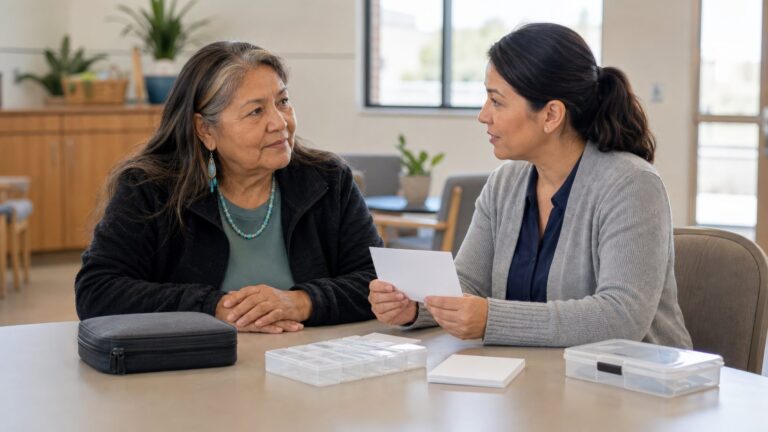
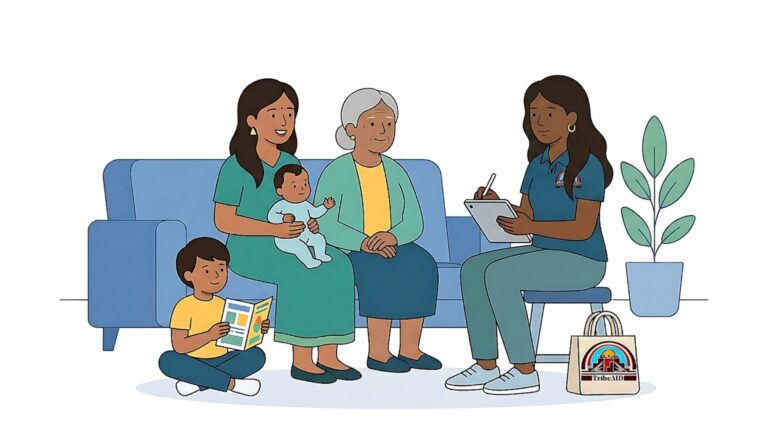
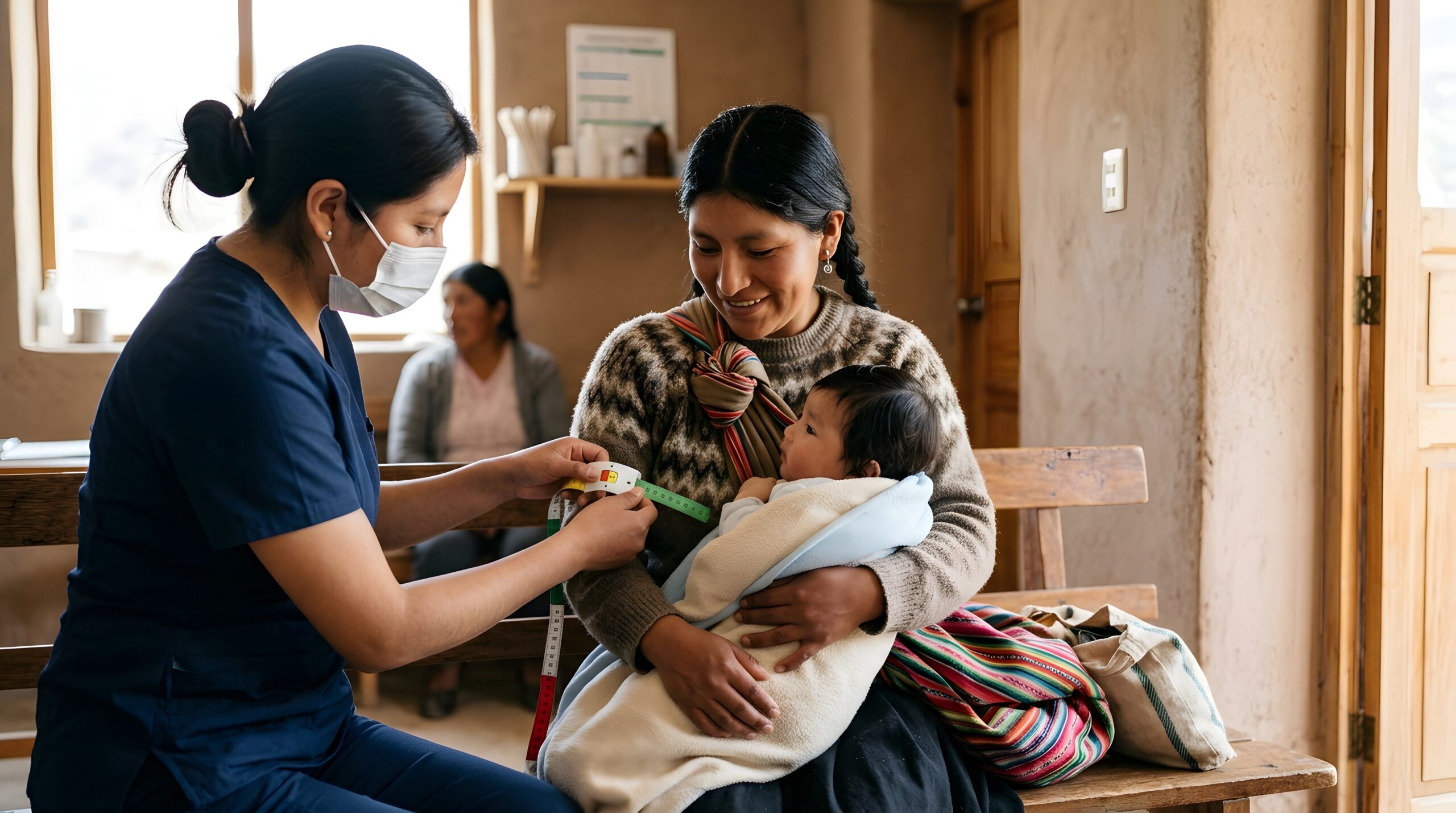
In many of our communities, no one goes through pregnancy alone. Grandmothers, aunties, sisters and friends have always surrounded new mothers with knowledge, food, prayer and practical help. Community Health Workers (CHWs) carry that tradition into today’s health system. They are trusted community members with health training. In fact, they walk alongside a mother from her first prenatal visit through the full year after her baby arrives.
That support matters more than many people realize. The numbers below show why, and what CHWs can do about them.
The reality: Native mothers face the highest risks
The United States has the highest maternal death rate of any high-income country, and the burden doesn’t fall evenly.
- Highest mortality of any group. According to the CDC, American Indian and Alaska Native (AI/AN) people had the highest pregnancy-related mortality ratio of any major demographic group in 2024, the most recent year with data for this population.
- A rate that doubled. The pregnancy-related mortality ratio for AI/AN women jumped from 32.0 deaths per 100,000 live births in 2017–2019 to 63.4 in 2020.
- Nearly all of these deaths are preventable. Maternal mortality review committees found 92% of pregnancy-related deaths among AI/AN women in 2020 were preventable. In the 2021 national review, committees judged that most, if not all, AI/AN maternal deaths could have been prevented.
- The danger continues long after delivery. An estimated 68% of pregnancy-related deaths among AI/AN women happen between one week and one year after birth. In fact, most occur after 43 days, well after the standard six-week checkup.
- Mental health is a leading cause. As of 2021, mental health conditions and infection were the leading underlying causes of pregnancy-related death among AI/AN women.
Severe maternal morbidity: the “near misses”
For every mother who dies, many more experience severe maternal morbidity (SMM): life-threatening complications such as hemorrhage, organ failure, eclampsia or the need for emergency surgery. Moreover, these events can cause lasting harm, including chronic high blood pressure and heart disease.
- A national study of 2012–2015 hospital deliveries found SMM or death among 2.0% of Indigenous women compared with 1.1% of white women, close to double the risk, with the highest rates among rural Indigenous women.
- AI/AN women experience preterm labor and obstetric hemorrhage (dangerous bleeding before, during or after childbirth) at more than twice the rate of white women.
- High blood pressure and preeclampsia raise the risk of SMM for Native mothers. In addition, researchers point to community factors such as rural location, gaps in prenatal care and low insurance coverage.
What this looks like here in New Mexico
In July 2026, the New Mexico Maternal Mortality Review Committee shared its latest report with state lawmakers. It covers pregnancy-related deaths from 2018 through 2023:
- 74 New Mexicans died from pregnancy-related causes within a year of pregnancy, and about 97% of those deaths were preventable.
- 46% of deaths happened in the late postpartum period, 43 to 365 days after birth.
- More than 40% were caused by behavioral health conditions, including anxiety, depression, PTSD and substance use. Infection, heart disease and hemorrhage were also leading causes.
- In 2021, during the COVID-19 pandemic, AI/AN women in New Mexico died from pregnancy-related causes at more than double the state average. Northwestern New Mexico accounted for about 10% of the state’s births but nearly 30% of its pregnancy-related deaths.
- Women with no or unknown prenatal care died at a rate of 326 per 100,000 births. That is nearly 10 times higher than the rate for women who started care in the first trimester.
However, there is good news: the state’s pregnancy-related death rate fell four-fold between 2021 and 2023, to about 24 per 100,000 live births, and in 2023 AI/AN women died at lower rates than their white and Hispanic peers. In other words, progress is possible. Our work now is to make sure it lasts.
How community health workers make a difference
The biggest risks include late postpartum complications, untreated depression and anxiety, missed prenatal care and infections that aren’t caught early. Fortunately, these are exactly the gaps community health workers are trained to fill. Here’s how.
Community health workers during pregnancy
- Getting care started early. CHWs help mothers find a provider, schedule visits, sort out insurance and Medicaid, and arrange transportation, so prenatal care begins in the first trimester and continues.
- Knowing the warning signs. CHWs teach mothers and families which symptoms need urgent attention, such as severe headaches, vision changes, swelling, heavy bleeding or chest pain, and when to call for help.
- Managing chronic conditions. For mothers living with diabetes or high blood pressure, CHWs support check-ins, medication routines, healthy eating and follow-through with providers.
- Addressing what’s happening at home. Food, housing, utilities, transportation and safety all affect a healthy pregnancy. CHWs connect families to resources for each.
After the baby arrives
- Staying connected for the whole year. Most Native maternal deaths happen after the first six weeks. Because of this, regular check-ins from a CHW through the postpartum year can catch problems the health system might miss.
- Mental health support and screening. CHWs check in on mood and stress, help with depression screening, and make warm handoffs to counseling.
- Practical newborn and recovery support. Breastfeeding help, wound and recovery care questions, well-baby visits, immunizations and family planning: CHWs help mothers keep track of it all.
- Cultural connection. CHWs from the community understand the importance of family, ceremony and traditional knowledge, and can help mothers feel respected rather than rushed in the health system.
The evidence: community health workers improve outcomes
Research from programs across the country shows what community health workers can do:
- Healthier birth weights for Native babies. A 10-year study of Arizona’s Health Start program, a CHW home-visiting program run with county and tribal health departments, compared 7,212 enrolled women with 53,948 who were not enrolled. Participation was associated with fewer low birthweight births among American Indian mothers and among mothers with diabetes or high blood pressure.
- Fewer NICU stays. In Detroit, pregnant women paired with CHWs through the Women-Inspired Neighborhood Network were about 45% less likely to have their babies admitted to the neonatal intensive care unit, and carried their pregnancies longer than a comparison group.
- Lower postpartum depression. A Gulf Coast program paired low-income mothers with CHWs for home visits and mobile check-ins. Six months after birth, these mothers had lower postpartum depression scores than a comparison group.
- More mothers screened and referred. When CHWs took on postpartum depression screening at a pediatric clinic, screening of eligible mothers rose by 21%, and referrals to behavioral health care among mothers who screened positive rose from 9% to 22%.
Community health workers and mental health care for the whole person
Mental health conditions are now among the leading causes of pregnancy-related death for Native women, and in New Mexico they caused more than 40% of pregnancy-related deaths between 2018 and 2023. That makes mental health care for pregnant and postpartum women one of the most important ways to save lives.
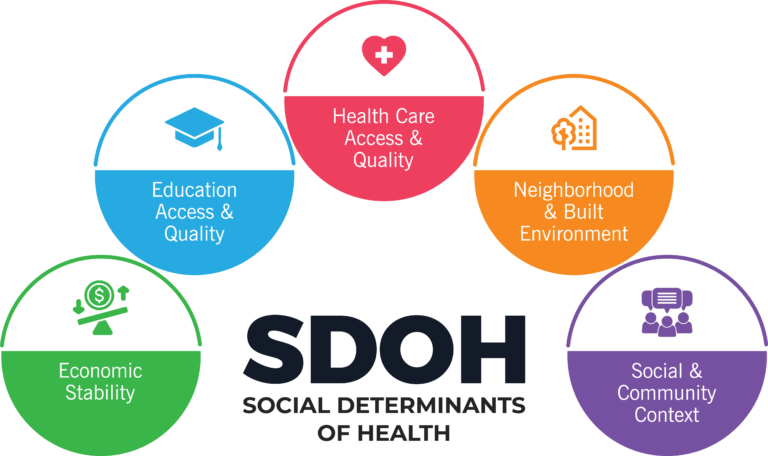
But a mother’s mental health doesn’t exist in a vacuum. Depression and anxiety after birth are often made worse by the stress of daily life: not knowing where the next meal or rent payment will come from, having no ride to appointments, living far from family, losing a job or coverage, or living with violence or past trauma. Health experts call these the social determinants of health, the conditions where we live, work and raise our families. Indeed, they shape health outcomes as much as anything that happens in a clinic.
How TribeAID’s approach is different
In many behavioral health practices, care centers on the counseling session itself. A client meets with a therapist for a session. However, needs like housing, food, transportation or insurance are often left for the client to sort out alone. At best, the client gets a referral list with little follow-up. Consequently, for a new mother who is exhausted, isolated or struggling, those unmet needs can keep her from getting better, or from coming back at all.
Integrated care: counseling plus community health workers
TribeAID was built differently. We integrate Community Health Worker services directly with our Behavioral Health Services, so a mother’s care team works on both her mental health and the life circumstances that affect it:
- One connected team. Our licensed counselors, social workers and community health workers work together. When a counselor learns that a mother is facing an eviction notice or can’t get to her prenatal visits, a CHW can step in to help, instead of handing her a phone number.
- Addressing root causes. CHWs help mothers connect to food assistance, housing support, transportation, Medicaid and Turquoise Care enrollment, WIC, and other resources. Easing these stresses also supports the healing that happens in counseling.
- Support between sessions. CHWs check in by phone, in person or through home visits, which helps mothers stay connected to care through the full postpartum year, when risk is highest.
- Culturally grounded healing. Our services are Native-led, trauma-responsive and blend traditional healing with evidence-based behavioral health care, including talking circles and groups such as Positive Indian Parenting, Seeking Safety and Wellbriety. We recognize that wellness connects mind, body and spirit with family, community and the land.
- Care that’s within reach. We offer counseling in person in Grants and Albuquerque and by telehealth. We accept Medicaid and Turquoise Care and most private insurance, with sliding-scale fees for people without coverage.
That’s why we care for both a mother’s emotional health and the conditions she lives in. As a result, she has a better chance to heal, bond with her baby and stay well.
How TribeAID’s community health workers can help
TribeAID’s Community Health Worker team supports Indigenous mothers and families living off the reservation in Grants, Albuquerque and beyond, both in person and by telehealth. Our community health workers work hand in hand with our behavioral health counselors, so mothers who need mental health support can get it from people who understand their community.
We also partner with tribal CHW and CHR programs to strengthen maternal health services on tribal lands.
Expecting or recently had a baby? Book an appointment with a TribeAID CHW.
Want to help? Your gift supports Indigenous health equity and helps more mothers get the care they deserve. Donate to support Indigenous health equity.
If you need help right now: For a medical emergency, call 911. For emotional support during or after pregnancy, call or text the National Maternal Mental Health Hotline at 1-833-TLC-MAMA (1-833-852-6262), available 24/7. If you are in crisis, call or text 988.
This article is for general information and is not a substitute for medical advice. Talk with your health care provider about your own pregnancy and postpartum care.
Sources
- KFF Health News, “Native American mothers and maternal mortality” (Jan. 2026): kffhealthnews.org
- CDC, Pregnancy-Related Deaths Among American Indian or Alaska Native Persons: Data From MMRCs in 38 U.S. States, 2020 (summary via NCUIH): ncuih.helpjuice.com
- Kozhimannil et al., “Severe Maternal Morbidity and Mortality Among Indigenous Women in the United States,” Obstetrics & Gynecology: nni.arizona.edu (PDF)
- “Community-Level Factors Are Predictors of Severe Maternal Morbidity Among AI/AN Pregnant People” (2023): pubmed.ncbi.nlm.nih.gov/37955840
- National Partnership for Women & Families, American Indian and Alaska Native Women’s Maternal Health: Addressing the Crisis: nihb.org
- Searchlight New Mexico, “Pregnancy-linked deaths down in New Mexico but still higher than pre-pandemic” (July 2026): searchlightnm.org
- New Mexico Department of Health, MMRC presentation to the Legislative Health and Human Services Committee (July 2026): nmlegis.gov (PDF)
- Northern Arizona University, Arizona Health Start CHW study: in.nau.edu
- Straughen et al., “Community health workers as change agents in improving equity in birth outcomes in Detroit,” PLoS ONE (2023): doi.org/10.1371/journal.pone.0281450
- “Reducing the Risk of Postpartum Depression in a Low-Income Community Through a CHW Intervention,” Maternal and Child Health Journal: scholarhub.vn
- Robidoux et al., “Maternal Postpartum Depression Screening and Referral in a Latinx Immigrant Population” (2023): chwcentral.org