Beyond Our Elders: How Community Health Workers Can Support Children and Families
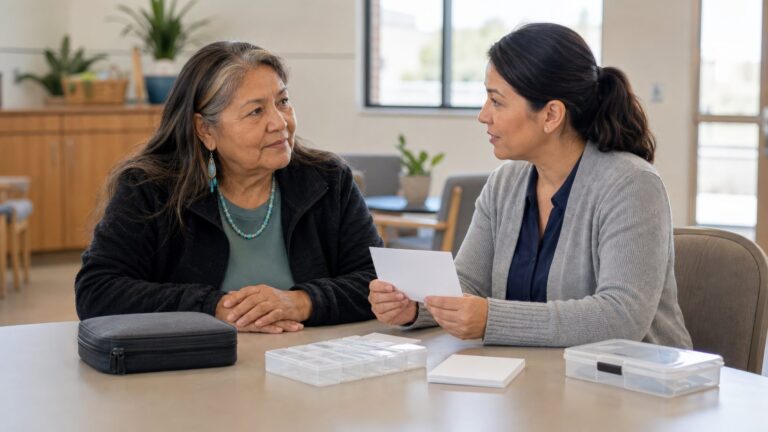
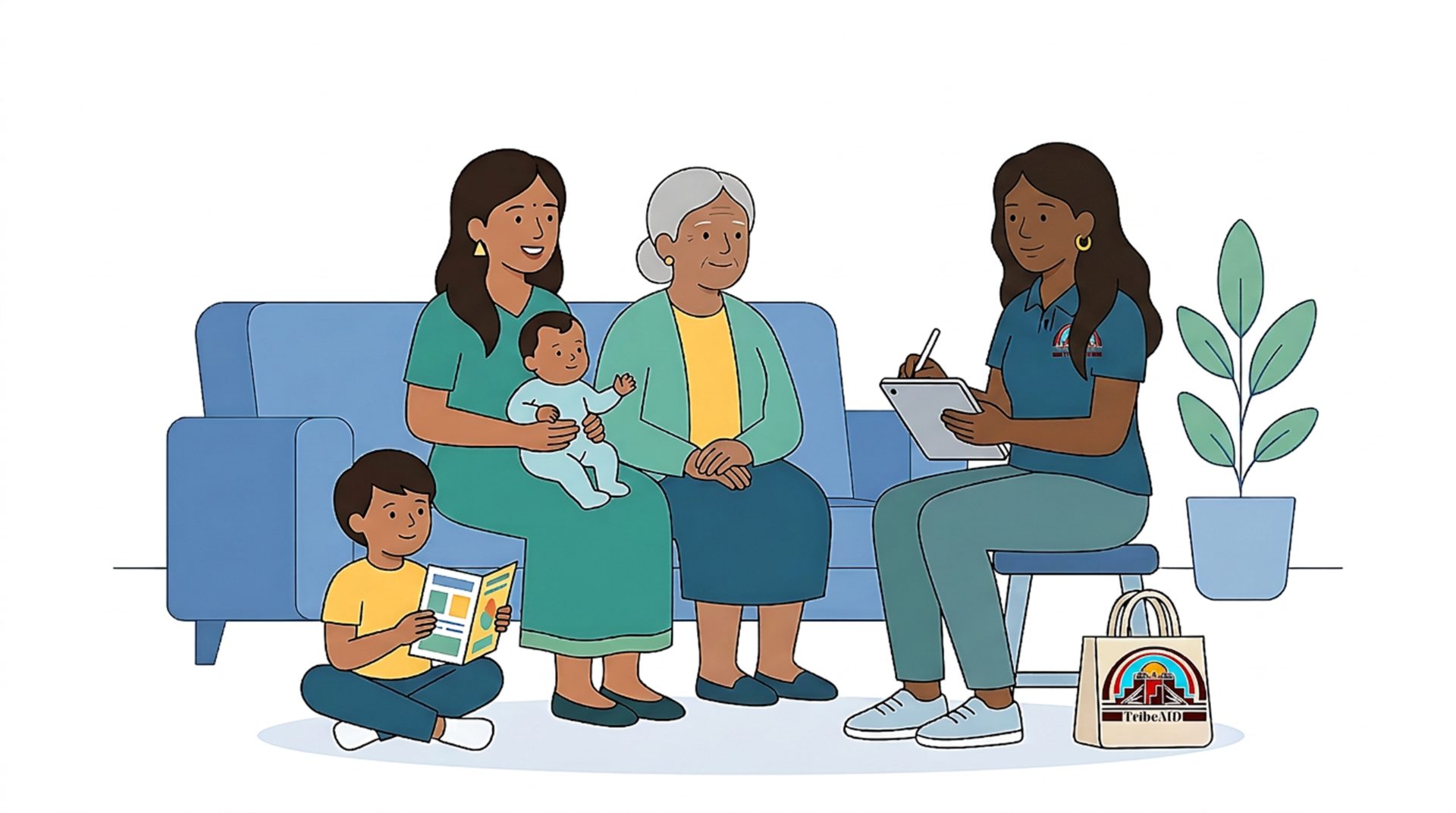
When most of us picture a Community Health Worker (CHW) or Community Health Representative (CHR) at work, we picture them with our elders: checking blood pressure, picking up prescriptions, making sure a grandmother gets to her dialysis appointment. That work is sacred, and it has deep roots in our communities. However, it is only part of the story. In fact, community health workers for children and families can make just as big a difference.
In New Mexico, Medicaid pays for CHW and CHR services for any member with a full-benefit Medicaid category of eligibility who needs them. There is no age floor. That means infants, school-age children, teenagers, and the parents and caregivers raising them can all receive CHW/CHR support. In a state where Medicaid covers most children, that is a large, often overlooked opportunity to strengthen families from the very beginning of life.
Children are Medicaid’s largest group, and they face the greatest needs
Children make up a bigger share of New Mexico’s Medicaid membership than any other group. Many of them are growing up in families stretched thin by poverty, food insecurity, and limited access to care. The numbers below show why CHW/CHR programs should be looking at the whole family, not just the oldest members of the household.
| What the data show | Statistic | Source |
|---|---|---|
| Share of NM Medicaid enrollees who are children | 41% | Georgetown CCF, 2025 |
| NM children covered by Medicaid | More than 6 in 10 | Georgetown CCF, 2025 |
| NM births paid for by Medicaid | 55% | Georgetown CCF, 2025 |
| NM children with special health care needs covered by Medicaid | 56% | Georgetown CCF, 2025 |
| NM child poverty rate (2024 data) | 22%, down from 25% | Source NM, June 2026 |
| NM national rank in child well-being (2026 KIDS COUNT) | 49th of 50; last in education and in family and community | Source NM, June 2026 |
| American Indian/Alaska Native (AI/AN) children in poverty, U.S. (2024, supplemental measure) | 16.6%, vs. 6.7% of white children | Economic Policy Institute, 2025 |
| AI/AN households with children that are food insecure (2016–2021) | 27.8% | Economic Policy Institute, 2025 |
| AI/AN people without health insurance (2024) | 18.9%, the highest of any group | Economic Policy Institute, 2025 |
| Suicide rate, AI/AN youth ages 10–24 (2018) | 29.4 per 100,000, vs. 11.6 overall | CDC authors, Public Health Reports, 2023 |
Behind each of these numbers is a child whose health depends less on what happens in a clinic and more on what happens at home, at school, and in the community. As a result, community health workers for children and families are already in the right place: that is exactly where they work.
Social drivers of health start shaping a life before birth
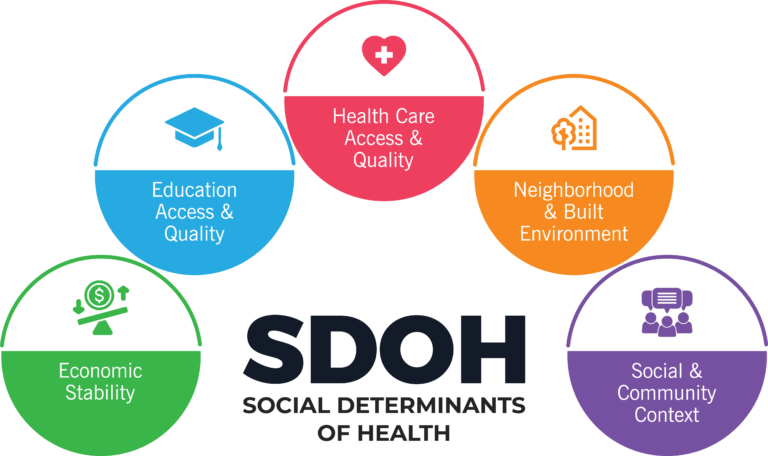
Social drivers of health are the conditions where people are born, live, learn, play, and work. For children, they include whether there is enough healthy food in the house, whether the family has stable and safe housing, whether there is running water and heat, whether a parent can get the child to appointments, and whether the family feels connected and supported. (For a deeper look, read our article on why social determinants of health exist.)
These conditions matter more in childhood than at any other time. A child’s brain and body are growing fast, and chronic stress from hunger, housing instability, or family hardship can affect learning, behavior, and health for years. On the other hand, when families can meet their basic needs, children are better able to grow, learn, and heal.
For Native children, moreover, these drivers carry the weight of history. Researchers at the CDC point to poverty, discrimination, historical trauma, and a lack of culturally responsive care as root causes of the high rates of suicide among Native youth. They also name what protects young people: cultural continuity across generations, spiritual grounding, and connection to family and friends. In other words, culture is healing. CHWs and CHRs, who come from and belong to the communities they serve, are well placed to strengthen both sides of that equation.
New Mexico Medicaid recognizes this connection. For example, the diagnosis codes that support CHW/CHR billing center on social needs, including codes for food insecurity, inadequate housing or utilities, unsafe drinking water, transportation insecurity, low income, problems related to upbringing, family circumstances, and even underachievement in school or discord with teachers and classmates.
How community health workers for children support development, school, and mental health
National research shows CHWs working with children and families reduce emergency department visits, increase well-child visit attendance, identify more unmet social needs, and improve parents’ experiences with their care teams (Center for Health Care Strategies, 2025). Here is how that plays out across a child’s life.
Healthy development
Regular well-child visits are where providers catch developmental delays early, when intervention works best. CHWs help families keep those appointments, understand screening results, and connect to early intervention when a concern comes up. A randomized trial of the PARENT model, which built CHWs into well-child care for Medicaid-insured children, found improved outcomes for families.
Chronic conditions
Asthma is one of the most common chronic illnesses of childhood and a leading reason kids miss school. In Washington State, a CHW home-visit program for Medicaid-enrolled children with uncontrolled asthma gave children about two more symptom-free days every two weeks, reduced urgent care visits, and returned $1.90 for every dollar invested (Campbell et al., American Journal of Public Health, 2015). Similarly, the same home-visit approach works for diabetes education, nutrition, and medication routines.
Education
After all, a child who is hungry, sick, or worried about where the family will sleep cannot focus in class. When CHWs connect a family to food programs, help fix a housing or utility problem, or make sure an asthma action plan reaches the school nurse, attendance and learning follow. In addition, children enrolled in Medicaid already miss fewer school days and are more likely to graduate; CHWs help families get the full benefit of that coverage.
Mental health
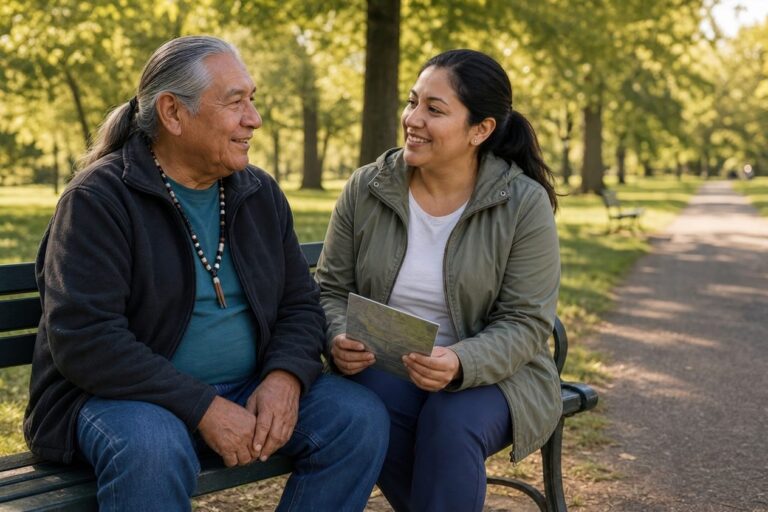
CHWs are often the first trusted person a family tells when a child is struggling. They can notice warning signs, reduce stigma, and walk with the family to counseling or a talking circle. Because so much youth distress stems from stress at home, addressing a family’s social needs is itself a form of prevention.
Family wellbeing
Likewise, supporting a child means supporting the adults raising them, including grandparents. Caregivers of children with special health care needs who worked with a CHW reported less distress and more confidence in understanding their child’s diagnosis.
What services from community health workers for children and families look like
New Mexico Medicaid covers three types of CHW/CHR services: system navigation, health promotion and coaching, and clinical support (HCA Supplement 25-10, August 2025). Each one translates naturally into the everyday work of community health workers for children and families.
| Medicaid service area | What it can look like with children and families |
|---|---|
| System navigation | Helping a family apply for WIC, SNAP, or school meal programs; finding emergency housing or utility help; arranging rides to well-child and specialist visits; interpreting during appointments; connecting a child to early intervention or school-based services |
| Health promotion and coaching | Teaching parents about asthma triggers, healthy eating, safe sleep, or diabetes care; setting family wellness goals; leading parenting or caregiver support groups; teaching families to advocate for their child at school or with providers |
| Clinical support | Home safety assessments (smoke detectors, mold, safe storage of medicines and firearms); reinforcing a child’s treatment plan; following up on referrals; giving feedback to the child’s doctor or counselor |
Billing basics for community health workers serving children
A few program details are worth knowing before you start:
- Eligibility: the child or caregiver must have a full-benefit Medicaid category, and services must be medically necessary. Verify eligibility in the New Mexico Medicaid Portal before each service. (For caregivers who also have Medicare, see The Medicare Gap.)
- Orders: a physician or ordering licensed practitioner must order services, or the CHW/CHR must complete the New Mexico Statewide Standing Order form for each member and date of service.
- Diagnosis codes: claims need an approved Z-code as the primary or secondary diagnosis, such as food insecurity (Z59.41), underachievement in school (Z55.3), or problems related to upbringing (Z62.9).
- Billing: CHW/CHRs bill services with CPT codes 98960–98962 (individual and group self-management education), in person or via telehealth.
- Limits: up to 16 units (8 hours) per member every 30 days without prior authorization.
- Not covered: childcare, transporting members yourself, and general community outreach events. However, Medicaid does pay for arranging transportation.
Community health workers for children: caring for the whole circle
Our elders taught us that health belongs to the whole family and the whole community. CHW and CHR programs can honor that teaching by widening the circle to include our children and the people raising them. Investing in community health workers for children is one of the most practical ways to do that. Therefore, every family visit is a chance to support a child’s growth, learning, and spirit, and for programs, every eligible visit is a chance to bring in Medicaid revenue that sustains the work.
For families: TribeAID provides CHW services directly to Indigenous children, youth, and families living off the reservation. Our CHWs can help with food, housing, and utility resources, getting to appointments, health education, and connecting your child to care. To get started, book an appointment through our online booking portal at tribeaid.org/bhs-appointments.
For tribal programs, TribeAID also supports CHW/CHR programs with CHW/R certification assistance, NPI and Medicaid provider enrollment, MCO credentialing, billing and coding training or full-service billing, staff training such as Motivational Interviewing and Mental Health First Aid, and program assessment. If your program is ready to expand services to children and families, we would be honored to help.
Book an appointment or contact TribeAID: (505) 542-1233 · info@tribeaid.org · tribeaid.org/bhs-appointments
Sources
- New Mexico Health Care Authority, Supplement 25-10: Implementation of CHW and CHR Updates (August 28, 2025)
- Georgetown University Center for Children and Families, Medicaid is Vital to New Mexico’s Children (2025)
- Source NM, New Mexico rises from last to 49th in child welfare in national KIDS COUNT survey (June 8, 2026)
- Economic Policy Institute, Native communities: poverty, food insecurity, and health care access (November 2025)
- Mpofu et al., Preventing Suicidal Behavior Among American Indian and Alaska Native Adolescents and Young Adults, Public Health Reports (2023)
- Center for Health Care Strategies, The Role of Community Health Workers in Pediatrics (October 2025)
- Campbell et al., CHW Home Visits for Medicaid-Enrolled Children with Asthma, American Journal of Public Health (2015)